

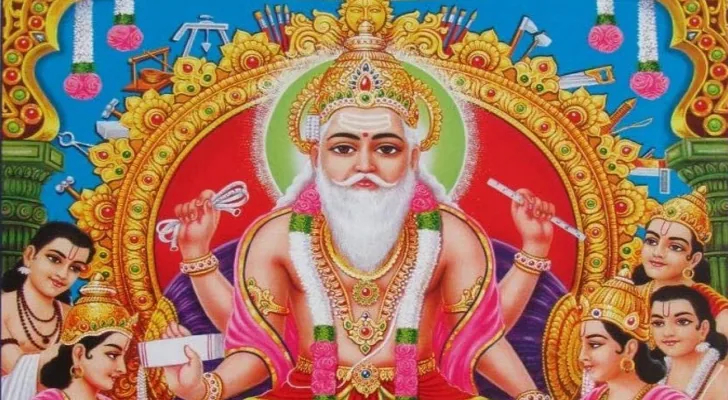
Vishwakarma Puja is observed on Kanya Sankranti, which usually falls on 16, 17 or 18 September, to honour Lord Vishwakarma, the divine architect and patron of craftspeople. Tools and machines are cleaned and worshipped, work usually stops for the day, and the puja ends with prasad shared among everyone present. In workshops and factories, the prasad is often the moment when the owner, workers, family and guests all gather together.
The simplest prasad is fruit, sweets such as peda, laddoo or boondi, and panchamrit. Many homes and workplaces also cook a dish to offer to the Lord before sharing it. Two favourites are given below: a simple khichdi and rice kheer. Customs vary from region to region, so follow your family's practice where it differs. For the full list of puja items, see Vishwakarma Puja items.
A few customs for cooking prasad
- Bathe and wear clean clothes before cooking, and use a clean kitchen and clean vessels.
- Prasad is traditionally cooked without onion and garlic.
- Do not taste the food while cooking; it is offered to the Lord first.
- Set aside a small portion in a clean bowl as naivedya, offer it at the altar during the puja, and then mix it back with the rest before serving.
Khichdi
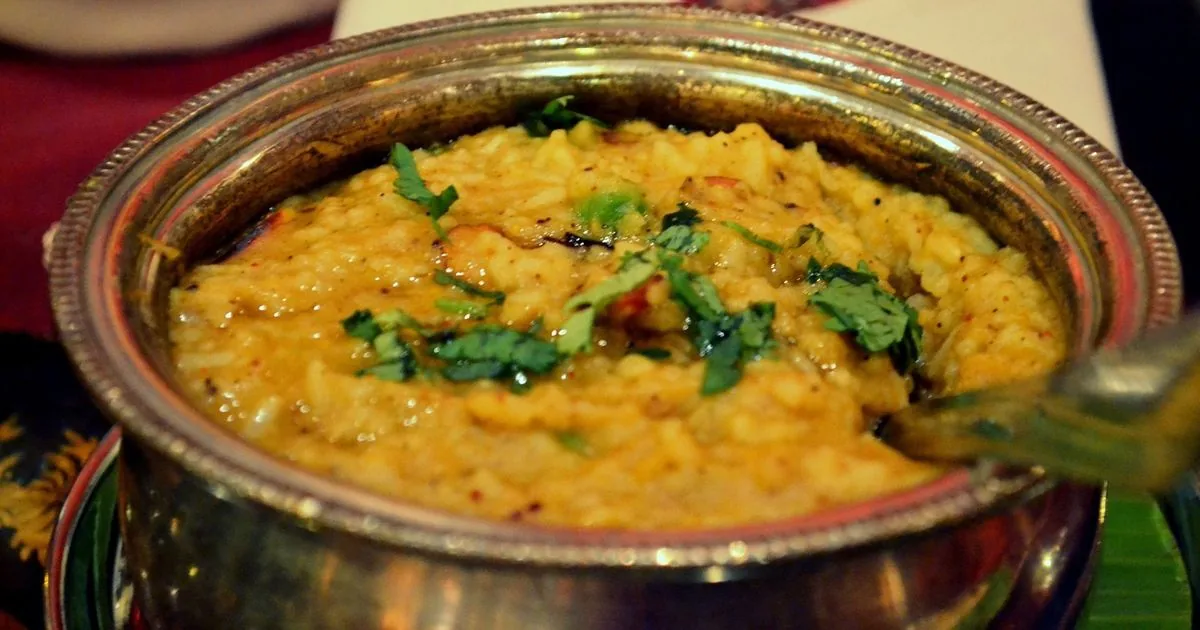
This is a gentle, satvik khichdi of rice and lentils cooked in ghee. In Bengal a similar dish called bhog khichuri is a favourite offering at many pujas. The quantities serve about four to six people.
Ingredients for khichdi
- Rice (short-grain or any everyday rice): 1 cup
- Split yellow moong dal or toor dal: ¾ cup
- Ghee: 3 tablespoons
- Cumin seeds: 1 teaspoon
- Bay leaves: 2
- Cloves: 4 or 5
- Green cardamom: 3 or 4 pods
- A small piece of cinnamon
- Grated ginger: 1 teaspoon
- Green chillies: 2, slit
- Turmeric powder: ½ teaspoon
- Tomato: 1, chopped (optional)
- Mixed vegetables such as potato, cauliflower, peas and carrot: 1 to 1½ cups, cut into pieces (optional)
- Salt to taste and a little sugar, if you like
- Water: about 5 to 6 cups
- Fresh coriander leaves, for garnish
How to make khichdi
- If using moong dal, dry-roast it in a pan on a low flame for a few minutes until it smells nutty. Wash the dal and rice together and drain.
- Heat the ghee in a heavy pot or pressure cooker. Add the cumin, bay leaves, cloves, cardamom and cinnamon, and let them crackle.
- Add the ginger and green chillies and stir for a few seconds. Add the vegetables and tomato, if using, and fry for 2 to 3 minutes.
- Add the rice and dal, the turmeric and the salt, and stir gently for a minute.
- Pour in the water and bring to a boil. Cover and cook on a low flame, stirring now and then, until the rice and dal are soft, about 20 to 25 minutes in a pot. In a pressure cooker, cook for about 3 whistles.
- Adjust the consistency with hot water if needed; khichdi thickens as it cools. Finish with a spoon of ghee and the coriander leaves.
- Offer a portion to Lord Vishwakarma before serving it as prasad.
Kheer
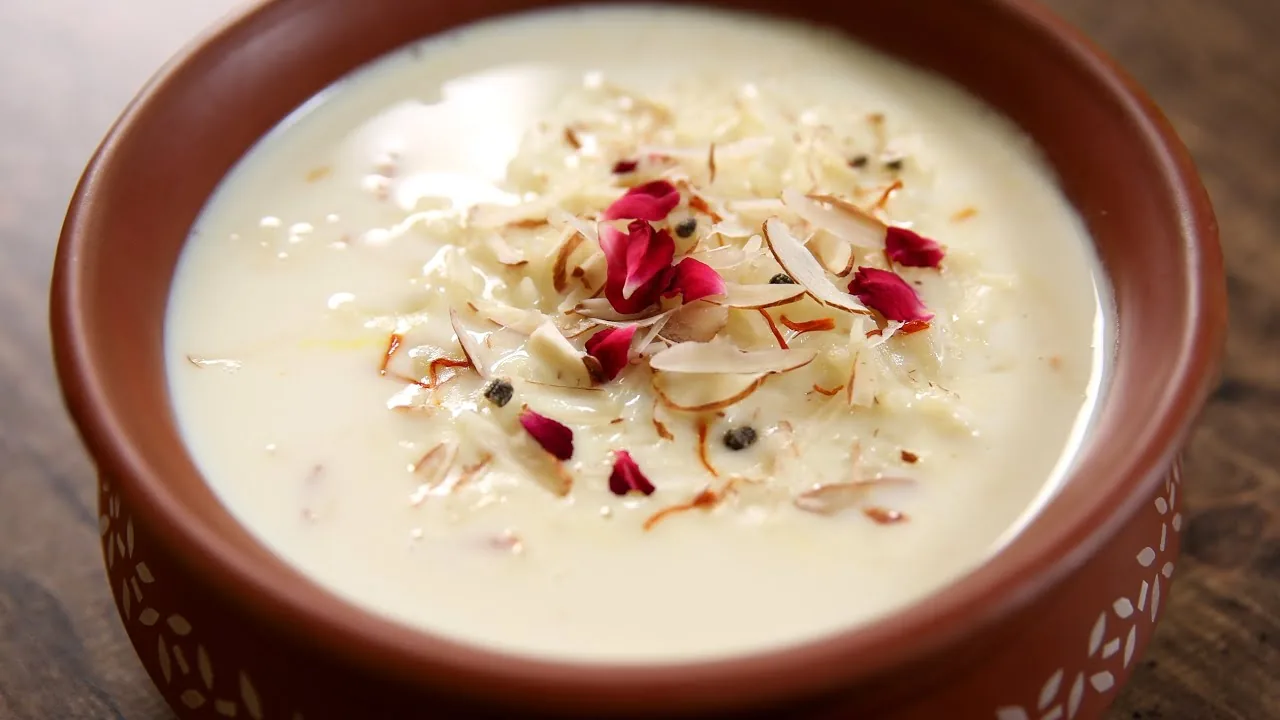
Rice kheer (payesh in Bengal) is one of the most common sweet offerings at Hindu pujas. These quantities serve about four people.
Ingredients for kheer
- Rice (short-grain or basmati), washed and drained: ¼ cup
- Full-cream milk: 4 to 5 cups
- Sugar: 3 to 4 tablespoons, to taste
- Green cardamom: 2 or 3 pods, seeds crushed
- Almonds, sliced: 2 tablespoons
- Pistachios, chopped: 1 tablespoon
- Raisins: 1 tablespoon (optional)
- A pinch of saffron soaked in a little warm milk (optional)
How to make kheer
- Bring the milk to a boil in a heavy-bottomed pan.
- Add the rice and cardamom, lower the flame and simmer, stirring often so the milk does not stick to the bottom, until the rice is very soft and the milk has thickened, about 30 to 40 minutes.
- Add the almonds, pistachios, raisins and saffron, and simmer for another 3 to 4 minutes.
- Add the sugar and stir until it dissolves completely.
- Take the pan off the heat. Kheer can be offered warm or at room temperature.
Panchamrit
Panchamrit is used during the puja and later shared as prasad. Mix about 1 cup of milk, 2 tablespoons of curd, 1 teaspoon of ghee, 1 teaspoon of honey and 1 tablespoon of sugar until smooth. Some families add a few tulsi leaves or chopped makhana.
Serving prasad at a workplace
At a factory or workshop, prasad is usually distributed after the aarti, often followed by a shared meal. A few practical points help:
- Estimate the number of workers, families and guests in advance and cook or order accordingly.
- Keep leaf plates, leaf bowls and spoons ready, and arrange a place to wash hands.
- Serve prasad to everyone present, whatever their role, as is the spirit of the day.
- Cooked prasad is best eaten the same day; keep leftovers covered and cool.
For what to arrange before the puja, see Vishwakarma Puja preparation, and for the order of the ritual, see the Vishwakarma Puja vidhi.
विश्वकर्मा पूजा कन्या संक्रांति को, जो प्रायः 16, 17 या 18 सितंबर को पड़ती है, देवताओं के शिल्पी और कारीगरों के आराध्य भगवान विश्वकर्मा के सम्मान में मनाई जाती है। इस दिन औज़ारों और मशीनों की सफ़ाई और पूजा होती है, सामान्यतः काम बंद रहता है, और पूजा के अंत में उपस्थित सभी लोगों में प्रसाद बाँटा जाता है। वर्कशॉप और कारखानों में प्रसाद का समय अक्सर वह क्षण होता है जब मालिक, कर्मचारी, परिवार और मेहमान सब एक साथ जुटते हैं।
सबसे सरल प्रसाद है फल, पेड़ा, लड्डू या बूँदी जैसी मिठाई और पंचामृत। बहुत से घरों और कार्यस्थलों पर कोई व्यंजन भी पकाया जाता है, जिसे पहले भगवान को अर्पित करके फिर बाँटा जाता है। नीचे दो लोकप्रिय व्यंजन दिए गए हैं: सादी खिचड़ी और चावल की खीर। अलग-अलग क्षेत्रों में परंपराएँ भिन्न हैं, इसलिए जहाँ अंतर हो वहाँ अपनी पारिवारिक परंपरा का पालन करें। पूजा सामग्री की पूरी सूची के लिए विश्वकर्मा पूजा सामग्री देखें।
प्रसाद बनाते समय कुछ परंपराएँ
- खाना बनाने से पहले स्नान करके साफ़ कपड़े पहनें, और रसोई व बर्तन साफ़ रखें।
- परंपरागत रूप से प्रसाद बिना प्याज़ और लहसुन के बनाया जाता है।
- बनाते समय भोजन चखें नहीं; पहले उसे भगवान को अर्पित किया जाता है।
- थोड़ा भाग एक साफ़ कटोरी में नैवेद्य के रूप में अलग रखें, पूजा के दौरान वेदी पर अर्पित करें, और फिर बाँटने से पहले उसे बाक़ी प्रसाद में मिला दें।
खिचड़ी
यह घी में पकी चावल और दाल की हल्की, सात्विक खिचड़ी है। बंगाल में इसी तरह की भोग खिचुड़ी कई पूजाओं का प्रिय भोग है। इस मात्रा से लगभग चार से छह लोगों के लिए खिचड़ी बनती है।
खिचड़ी की सामग्री
- चावल (छोटे दाने वाला या रोज़ का कोई भी चावल): 1 कप
- पीली मूँग दाल या अरहर (तूर) दाल: ¾ कप
- घी: 3 बड़े चम्मच
- जीरा: 1 छोटा चम्मच
- तेजपत्ता: 2
- लौंग: 4 या 5
- हरी इलायची: 3 या 4
- दालचीनी का छोटा टुकड़ा
- कद्दूकस किया अदरक: 1 छोटा चम्मच
- हरी मिर्च: 2, बीच से चीरी हुई
- हल्दी चूर्ण: ½ छोटा चम्मच
- टमाटर: 1, कटा हुआ (वैकल्पिक)
- मिली-जुली सब्ज़ियाँ, जैसे आलू, फूलगोभी, मटर और गाजर: 1 से 1½ कप, टुकड़ों में कटी (वैकल्पिक)
- स्वादानुसार नमक, और चाहें तो थोड़ी चीनी
- पानी: लगभग 5 से 6 कप
- सजाने के लिए हरा धनिया
खिचड़ी बनाने की विधि
- मूँग दाल ले रहे हों तो उसे धीमी आँच पर कुछ मिनट सूखा भून लें, जब तक सोंधी ख़ुशबू न आने लगे। फिर दाल और चावल साथ धोकर पानी निथार लें।
- भारी तले के बर्तन या प्रेशर कुकर में घी गरम करें। जीरा, तेजपत्ता, लौंग, इलायची और दालचीनी डालकर चटकने दें।
- अदरक और हरी मिर्च डालकर कुछ सेकंड चलाएँ। सब्ज़ियाँ और टमाटर डाल रहे हों तो डालकर 2 से 3 मिनट भूनें।
- चावल, दाल, हल्दी और नमक डालकर एक मिनट हल्के हाथ से चलाएँ।
- पानी डालकर उबाल आने दें। ढककर धीमी आँच पर बीच-बीच में चलाते हुए पकाएँ, जब तक चावल और दाल नरम न हो जाएँ। बर्तन में इसमें लगभग 20 से 25 मिनट लगते हैं; प्रेशर कुकर में लगभग 3 सीटी तक पकाएँ।
- ज़रूरत हो तो गरम पानी डालकर गाढ़ापन ठीक कर लें; ठंडी होने पर खिचड़ी गाढ़ी हो जाती है। ऊपर से एक चम्मच घी और हरा धनिया डालें।
- प्रसाद के रूप में बाँटने से पहले थोड़ा भाग भगवान विश्वकर्मा को अर्पित करें।
खीर
चावल की खीर (बंगाल में पायेस) हिंदू पूजाओं में सबसे अधिक चढ़ाए जाने वाले मीठे भोगों में से है। इस मात्रा से लगभग चार लोगों के लिए खीर बनती है।
खीर की सामग्री
- चावल (छोटे दाने वाला या बासमती), धोकर निथारा हुआ: ¼ कप
- फ़ुल क्रीम दूध: 4 से 5 कप
- चीनी: 3 से 4 बड़े चम्मच, स्वादानुसार
- हरी इलायची: 2 या 3, दाने कुटे हुए
- कतरे हुए बादाम: 2 बड़े चम्मच
- कटे हुए पिस्ते: 1 बड़ा चम्मच
- किशमिश: 1 बड़ा चम्मच (वैकल्पिक)
- थोड़े गुनगुने दूध में भिगोई एक चुटकी केसर (वैकल्पिक)
खीर बनाने की विधि
- भारी तले के बर्तन में दूध उबालें।
- चावल और इलायची डालें, आँच धीमी करें और बार-बार चलाते हुए पकाएँ ताकि दूध तले में न लगे। चावल पूरी तरह नरम होने और दूध गाढ़ा होने तक, लगभग 30 से 40 मिनट पकाएँ।
- बादाम, पिस्ता, किशमिश और केसर डालकर 3 से 4 मिनट और पकाएँ।
- चीनी डालें और पूरी तरह घुलने तक चलाएँ।
- बर्तन आँच से उतार लें। खीर गुनगुनी या सामान्य तापमान पर अर्पित की जा सकती है।
पंचामृत
पंचामृत पूजा में प्रयोग होता है और बाद में प्रसाद के रूप में बाँटा जाता है। लगभग 1 कप दूध, 2 बड़े चम्मच दही, 1 छोटा चम्मच घी, 1 छोटा चम्मच शहद और 1 बड़ा चम्मच चीनी को अच्छी तरह मिला लें। कुछ परिवार इसमें तुलसी के पत्ते या कटे मखाने भी डालते हैं।
कार्यस्थल पर प्रसाद वितरण
कारखाने या वर्कशॉप में प्रसाद प्रायः आरती के बाद बाँटा जाता है और उसके बाद अक्सर सामूहिक भोज होता है। कुछ व्यावहारिक बातें काम आती हैं:
- कर्मचारियों, परिवारों और मेहमानों की संख्या का पहले से अनुमान लगाकर उसी हिसाब से प्रसाद बनाएँ या मँगवाएँ।
- पत्तल, दोना और चम्मच तैयार रखें, और हाथ धोने की जगह की व्यवस्था करें।
- दिन की भावना के अनुरूप, उपस्थित हर व्यक्ति को, चाहे उसका पद कुछ भी हो, प्रसाद दें।
- पका हुआ प्रसाद उसी दिन खा लेना अच्छा है; बचा हुआ ढककर ठंडी जगह रखें।
पूजा से पहले क्या-क्या व्यवस्था करनी है, यह विश्वकर्मा पूजा की तैयारी में और पूजन का क्रम विश्वकर्मा पूजा विधि में देखें।