

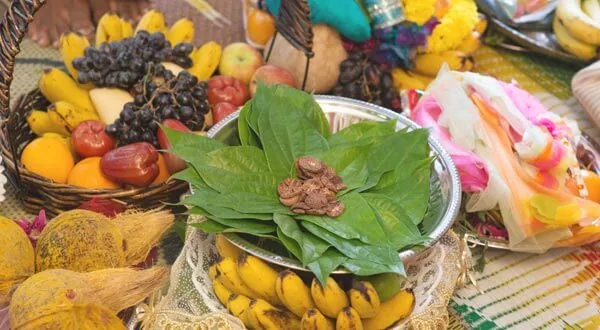
Vishwakarma Puja is performed with faith in Lord Vishwakarma, the divine architect and craftsman, and is centred on the worship of the tools, machines and vehicles that support a person's work. There are different ways of performing it. Some people install an idol or a framed picture of Lord Vishwakarma, while many craftspeople regard their tools themselves as his form and worship them directly. This page sets out the vidhi step by step, with simple mantras that anyone can say. For an overview of who performs the puja and how it differs at home and at a workplace, see the procedure of Vishwakarma Puja.
The puja is usually performed on Kanya Sankranti (which usually falls on 16, 17 or 18 September). Many people prefer to begin at the time recommended by their priest or local panchang. Customs differ by region and family; where your tradition differs, follow it.
Before you begin
- Clean the workplace, tools, machines and vehicles, ideally the day before, and switch off all machines. See Vishwakarma Puja preparation.
- Keep all the samagri ready on a thali. The full list is on the Vishwakarma Puja items page.
- Sit on an asan facing east or north if possible, with the altar in front of you.
Step-by-step Vishwakarma Puja vidhi
1. Bath and clean clothes
Bathe in the morning and put on clean or new clothes. Many people keep a fast until the puja is complete, as a personal choice.
2. Set up the altar
On a clean spot, draw a rangoli or an eight-petalled lotus (ashtadal kamal) with rice flour or colours if you wish. Place a chowki over it, cover it with a yellow or red cloth and place the picture or idol of Lord Vishwakarma on it. Arrange the cleaned tools on a clean cloth beside the altar.
3. Purification and lamp
Sip a little water three times from your right palm (achaman), saying one name each time, then wash your hands:
Om Keshavaya Namah, Om Narayanaya Namah, Om Madhavaya Namah
ॐ केशवाय नमः, ॐ नारायणाय नमः, ॐ माधवाय नमः
Sprinkle a little water (with Ganga jal, if available) over yourself, the altar and the samagri with a flower or mango leaf. Light the ghee lamp and place it to the right of the deity.
4. Sankalp
Take a little water, akshat, a flower and a coin in your right hand. Say your name, the place and the occasion, and state your intention in your own words, for example: "On this day of Vishwakarma Puja, I worship Lord Vishwakarma and the tools of my work, and pray for skill, safety and wellbeing for all who work here." Release the contents in front of the altar. Then tie a mauli (raksha sutra) on the right wrist of the person performing the puja, and on the spouse's wrist if both are seated together.
5. Ganesh puja
Place a betel nut on a betel leaf as a symbol of Lord Ganesh, or use a small idol. Offer water, roli, akshat, flowers and durva, and say:
Om Gam Ganapataye Namah
ॐ गं गणपतये नमः
6. Kalash sthapana
Draw a swastika on the kalash with roli and tie mauli around its neck. Fill it with water, add a little Ganga jal, akshat, haldi, a betel nut and a coin, place five mango leaves at the mouth and set a coconut wrapped in red cloth on top. Place it to the left of the deity on a small heap of rice, offer roli, akshat and a flower, and say:
Om Varunaya Namah
ॐ वरुणाय नमः
7. Worship of Lord Vishwakarma
First honour the seat of the deity by offering a few flowers and akshat on the chowki, saying:
Om Adhara Shaktyai Namah, Om Kurmaya Namah, Om Anantaya Namah, Om Prithivyai Namah
ॐ आधारशक्त्यै नमः, ॐ कूर्माय नमः, ॐ अनन्ताय नमः, ॐ पृथिव्यै नमः
Then close your eyes and meditate on Lord Vishwakarma as the four-armed divine craftsman with a white beard, holding his tools, seated on his swan. Holding a flower, invite him to the altar and offer the flower at his feet:
Om Vishwakarmane Namah, Avahayami, Sthapayami
ॐ विश्वकर्मणे नमः, आवाहयामि, स्थापयामि
Now make the offerings one by one, saying "Om Vishwakarmane Namah" (ॐ विश्वकर्मणे नमः) with each:
- Water to wash the feet and for achaman; bathe a small idol with water and panchamrit, or sprinkle a picture with a flower
- Mauli, janeu or a small piece of cloth as vastra (clothes)
- Sandalwood paste, roli, kumkum, haldi and akshat
- Flowers and a garland
- Incense (dhoop) and the lamp (deep)
- Fruits, sweets, panchamrit and any cooked prasad as naivedya, with a little water
- Betel leaf with betel nut, and dakshina
8. Worship of tools and machines
Go to each tool, machine and vehicle in turn. Sprinkle a little water, apply a tilak of roli or sindoor, offer flowers and akshat, and tie a mauli if that is your custom, saying "Om Vishwakarmane Namah" each time. Large machines are worshipped where they stand. Some people also show the lamp and incense to each machine. Keep all machines switched off throughout.
9. Katha
Sit with the family or workers and read or listen to the Vishwakarma Puja katha. Many people also recite the Vishwakarma Chalisa.
10. Aarti and pushpanjali
Light camphor or a ghee lamp on the aarti plate and sing the Vishwakarma aarti "Om Jai Shri Vishwakarma" together, ringing the bell. After the aarti, everyone takes a few flowers in folded hands and offers them at the altar (pushpanjali), saying "Om Vishwakarmane Namah" three times.
11. Havan (optional)
Where a havan is performed, light the fire in the havan kund with mango wood and cow dung cakes, and offer ghee and havan samagri with the mantra below, usually 11, 21 or 108 times as your priest advises. End with the purnahuti, offering a coconut with ghee and the remaining samagri. Some priests perform the havan before the final aarti.
Om Vishwakarmane Swaha
ॐ विश्वकर्मणे स्वाहा
12. Prayer for forgiveness, prasad and dakshina
With folded hands, ask Lord Vishwakarma to forgive any mistakes made during the puja, whether in words, actions or the items offered. Offer the prasad, then share it with everyone present. If a priest has performed the puja, offer him dakshina and, if possible, some fruit, sweets or clothes.
After the puja
Keep the lamp safely away from fuel, oil and cloth, and never leave it burning unattended. If a clay idol was installed, it is usually immersed the next day along with the flowers and offerings, ideally in a tank or a bucket of water rather than a river. A picture stays in place. Work and machines usually resume the following day.
A simpler version
If you are short of time or items, a simple puja is entirely acceptable according to tradition: bathe, clean your tools, light a lamp and incense before Lord Vishwakarma's picture, offer roli, akshat, flowers and sweets to the Lord and to your tools while saying "Om Vishwakarmane Namah", sing the aarti and share the prasad.
विश्वकर्मा पूजा दिव्य वास्तुकार और शिल्पी भगवान विश्वकर्मा के प्रति आस्था के साथ की जाती है, और इसके केंद्र में होते हैं वे औज़ार, मशीनें और वाहन जो व्यक्ति के काम का सहारा हैं। इसे करने के अलग-अलग तरीक़े हैं। कुछ लोग भगवान विश्वकर्मा की प्रतिमा या फ़्रेम की हुई तस्वीर स्थापित करते हैं, जबकि बहुत से कारीगर अपने औज़ारों को ही उनका रूप मानकर सीधे उनकी पूजा करते हैं। इस पृष्ठ पर पूजा विधि चरणबद्ध रूप में दी गई है, ऐसे सरल मंत्रों के साथ जिन्हें कोई भी बोल सकता है। पूजा कौन करता है और घर तथा कार्यस्थल की पूजा में क्या अंतर है, इसके सार के लिए विश्वकर्मा पूजा की प्रक्रिया देखें।
पूजा सामान्यतः कन्या संक्रांति को होती है (जो प्रायः 16, 17 या 18 सितंबर को पड़ती है)। बहुत से लोग पुरोहित या स्थानीय पंचांग द्वारा बताए गए समय पर पूजा आरंभ करना पसंद करते हैं। क्षेत्र और परिवार के अनुसार परंपराएँ अलग होती हैं; जहाँ आपकी परंपरा भिन्न हो, उसी का पालन करें।
शुरू करने से पहले
- कार्यस्थल, औज़ार, मशीनें और वाहन, हो सके तो एक दिन पहले, साफ़ कर लें और सभी मशीनें बंद कर दें। देखें विश्वकर्मा पूजा की तैयारी।
- सारी सामग्री थाली में तैयार रखें। पूरी सूची विश्वकर्मा पूजा सामग्री पृष्ठ पर है।
- हो सके तो पूर्व या उत्तर की ओर मुँह करके आसन पर बैठें, वेदी आपके सामने हो।
विश्वकर्मा पूजा की चरणबद्ध विधि
1. स्नान और स्वच्छ वस्त्र
सुबह स्नान करके साफ़ या नए कपड़े पहनें। बहुत से लोग अपनी इच्छा से पूजा पूरी होने तक उपवास रखते हैं।
2. वेदी की स्थापना
साफ़ जगह पर चाहें तो चावल के आटे या रंगों से रंगोली या अष्टदल कमल बनाएँ। उस पर चौकी रखें, पीला या लाल कपड़ा बिछाएँ और भगवान विश्वकर्मा की तस्वीर या प्रतिमा स्थापित करें। साफ़ किए गए औज़ार वेदी के पास एक साफ़ कपड़े पर सजा दें।
3. शुद्धि और दीप प्रज्वलन
दाहिनी हथेली में थोड़ा जल लेकर तीन बार आचमन करें, हर बार एक नाम बोलें, फिर हाथ धो लें:
ॐ केशवाय नमः, ॐ नारायणाय नमः, ॐ माधवाय नमः
फूल या आम के पत्ते से थोड़ा जल (उपलब्ध हो तो गंगाजल मिलाकर) अपने ऊपर, वेदी पर और सामग्री पर छिड़कें। घी का दीपक जलाकर भगवान के दाहिनी ओर रखें।
4. संकल्प
दाहिने हाथ में थोड़ा जल, अक्षत, फूल और एक सिक्का लें। अपना नाम, स्थान और अवसर बोलें और अपने शब्दों में संकल्प लें, उदाहरण के लिए: "आज विश्वकर्मा पूजा के दिन मैं भगवान विश्वकर्मा और अपने काम के औज़ारों की पूजा करता/करती हूँ, और यहाँ काम करने वाले सभी लोगों के कौशल, सुरक्षा और कल्याण की प्रार्थना करता/करती हूँ।" फिर हाथ की सामग्री वेदी के सामने छोड़ दें। इसके बाद पूजा करने वाले व्यक्ति की दाहिनी कलाई पर, और यदि पति-पत्नी साथ बैठे हों तो दोनों की कलाई पर, मौली (रक्षासूत्र) बाँधें।
5. गणेश पूजन
पान के पत्ते पर एक सुपारी रखकर उसे भगवान गणेश का प्रतीक मानें, या छोटी प्रतिमा रखें। जल, रोली, अक्षत, फूल और दूर्वा अर्पित करें और बोलें:
ॐ गं गणपतये नमः
6. कलश स्थापना
कलश पर रोली से स्वस्तिक बनाएँ और उसकी गर्दन पर मौली बाँधें। उसमें जल भरें, थोड़ा गंगाजल, अक्षत, हल्दी, एक सुपारी और एक सिक्का डालें, मुख पर आम के पाँच पत्ते रखें और ऊपर लाल कपड़े में लिपटा नारियल रखें। इसे भगवान के बाईं ओर चावल की छोटी ढेरी पर स्थापित करें, रोली, अक्षत और फूल चढ़ाएँ और बोलें:
ॐ वरुणाय नमः
7. भगवान विश्वकर्मा का पूजन
सबसे पहले चौकी पर कुछ फूल और अक्षत चढ़ाकर भगवान के आसन का पूजन करें और बोलें:
ॐ आधारशक्त्यै नमः, ॐ कूर्माय नमः, ॐ अनन्ताय नमः, ॐ पृथिव्यै नमः
फिर आँखें बंद करके भगवान विश्वकर्मा का ध्यान करें: चार भुजाओं वाले, श्वेत दाढ़ी वाले दिव्य शिल्पी, जो हाथों में अपने औज़ार लिए हंस पर विराजमान हैं। हाथ में फूल लेकर उन्हें वेदी पर आमंत्रित करें और फूल उनके चरणों में अर्पित करें:
ॐ विश्वकर्मणे नमः, आवाहयामि, स्थापयामि
अब हर वस्तु के साथ "ॐ विश्वकर्मणे नमः" बोलते हुए एक-एक करके अर्पित करें:
- चरण धोने और आचमन के लिए जल; छोटी प्रतिमा हो तो जल और पंचामृत से स्नान कराएँ, तस्वीर हो तो फूल से जल छिड़कें
- वस्त्र के रूप में मौली, जनेऊ या कपड़े का छोटा टुकड़ा
- चंदन, रोली, कुमकुम, हल्दी और अक्षत
- फूल और माला
- धूप और दीप
- नैवेद्य के रूप में फल, मिठाई, पंचामृत और पकाया हुआ प्रसाद, साथ में थोड़ा जल
- सुपारी सहित पान का पत्ता, और दक्षिणा
8. औज़ारों और मशीनों की पूजा
एक-एक करके हर औज़ार, मशीन और वाहन के पास जाएँ। थोड़ा जल छिड़कें, रोली या सिंदूर का तिलक लगाएँ, फूल और अक्षत चढ़ाएँ, और परंपरा हो तो मौली बाँधें, हर बार "ॐ विश्वकर्मणे नमः" बोलें। बड़ी मशीनों की पूजा उनकी जगह पर ही करें। कुछ लोग हर मशीन को दीपक और धूप भी दिखाते हैं। पूरी पूजा के दौरान मशीनें बंद रखें।
9. कथा
परिवार या कर्मचारियों के साथ बैठकर विश्वकर्मा पूजा कथा पढ़ें या सुनें। बहुत से लोग विश्वकर्मा चालीसा का पाठ भी करते हैं।
10. आरती और पुष्पांजलि
आरती की थाली में कपूर या घी का दीपक जलाएँ और घंटी बजाते हुए सब मिलकर "ॐ जय श्री विश्वकर्मा" विश्वकर्मा आरती गाएँ। आरती के बाद सब लोग जुड़े हाथों में कुछ फूल लेकर वेदी पर अर्पित करें (पुष्पांजलि) और तीन बार "ॐ विश्वकर्मणे नमः" बोलें।
11. हवन (वैकल्पिक)
जहाँ हवन होता है, वहाँ हवन कुंड में आम की लकड़ी और उपलों से अग्नि प्रज्वलित करें और नीचे दिए मंत्र के साथ घी और हवन सामग्री की आहुतियाँ दें, सामान्यतः पुरोहित के बताए अनुसार 11, 21 या 108 बार। अंत में घी सहित नारियल और बची हुई सामग्री से पूर्णाहुति दें। कुछ पुरोहित हवन अंतिम आरती से पहले कराते हैं।
ॐ विश्वकर्मणे स्वाहा
12. क्षमा प्रार्थना, प्रसाद और दक्षिणा
हाथ जोड़कर भगवान विश्वकर्मा से पूजा में वाणी, कर्म या सामग्री में हुई किसी भी भूल के लिए क्षमा माँगें। प्रसाद अर्पित करें, फिर सभी उपस्थित लोगों में बाँटें। यदि पूजा पुरोहित ने कराई है तो उन्हें दक्षिणा दें और संभव हो तो फल, मिठाई या वस्त्र भी भेंट करें।
पूजा के बाद
दीपक को ईंधन, तेल और कपड़े से दूर सुरक्षित रखें और उसे कभी बिना देखरेख के जलता न छोड़ें। यदि मिट्टी की प्रतिमा स्थापित की गई हो तो उसे प्रायः अगले दिन फूलों और चढ़ावे के साथ विसर्जित किया जाता है, बेहतर है कि नदी के बजाय किसी कुंड या पानी की बाल्टी में। तस्वीर अपनी जगह रहती है। काम और मशीनें सामान्यतः अगले दिन से फिर शुरू होती हैं।
सरल विधि
यदि समय या सामग्री कम हो, तो परंपरा के अनुसार सरल पूजा भी पूरी तरह उचित है: स्नान करें, अपने औज़ार साफ़ करें, भगवान विश्वकर्मा की तस्वीर के सामने दीपक और अगरबत्ती जलाएँ, "ॐ विश्वकर्मणे नमः" बोलते हुए भगवान और अपने औज़ारों को रोली, अक्षत, फूल और मिठाई अर्पित करें, आरती गाएँ और प्रसाद बाँटें।