

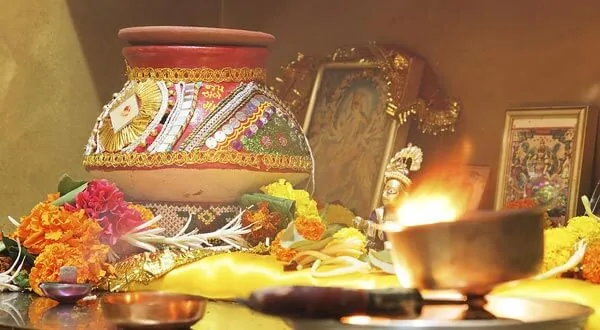
Vishwakarma Puja rests on a set of beliefs about who Lord Vishwakarma is, where he came from and why the tools of everyday work deserve worship. Ancient texts and living tradition offer several accounts, and they do not always agree. This page brings together the most widely held beliefs, presented as matters of faith rather than history.
The divine creator and craftsman
Devotees believe that Lord Vishwakarma is honoured not only by human beings but by the gods themselves, because so many of their cities, palaces, chariots and weapons are said to be his work. In the Rigveda he is praised as the all-maker, the creator of heaven and earth. In later tradition he is the deva-shilpi, the craftsman of the gods, and the first teacher of architecture and the building arts.
For this reason he is regarded as the patron deity of artisans, craftspeople, engineers, architects, mechanics, and factory and industrial workers. Many believe that every skill used in making something, from carving wood to designing a bridge, is a small share of his divine knowledge.
Accounts of his birth
The texts give different accounts of Lord Vishwakarma's origin, and devotees often hold them side by side:
- Son of Prabhasa: according to a widely known Puranic account, Prabhasa, one of the eight Vasus and a son of Dharma, married a sister of Brihaspati, the guru of the gods. Lord Vishwakarma was born to them.
- Descendant of Vastu: another account, popular in devotional tradition, says that Dharma and his wife Vastu had a son named Vastu Dev, regarded as the founder of the science of building, and that Lord Vishwakarma was born to Vastu Dev and his wife Angirasi.
- Born of Brahma: some traditions say that Lord Brahma brought Vishwakarma into being to give shape to his creation, while the Vedic hymns identify Vishvakarman with the creator himself.
These accounts differ in detail but agree on the essential belief: that Lord Vishwakarma is the source of the skills that turn ideas into lasting things.
The five forms of Vishwakarma
Some traditions speak of five forms or appearances of Lord Vishwakarma: Virat Vishwakarma, the cosmic creator; Dharmavanshi Vishwakarma; Angiravanshi Vishwakarma; Sudhanva Vishwakarma; and Bhriguvanshi Vishwakarma. Devotees understand them as different expressions of the same divine craftsman across the ages.
Craft communities that regard Lord Vishwakarma as their ancestor often trace their lineages to his five sons, traditionally named Manu, Maya, Tvashta, Shilpi and Daivajna; in the Vishwakarma Puja katha, Sage Lomash names them along with their crafts. Manu is linked with iron, Maya with wood, Tvashta with bronze and copper, Shilpi with brick and stone, and Daivajna with gold and silver, which is why carpenters, blacksmiths, metalworkers, sculptors and goldsmiths alike honour him as the head of their family.
What devotees believe he created
According to tradition, Lord Vishwakarma built the homes of the gods and the objects they use. Among the creations credited to him are:
- the city of Dwarka for Lord Krishna and the golden city of Lanka;
- the Pushpaka Vimana, the flying chariot;
- Indra's Vajra, made from the bones of the sage Dadhichi;
- the discus of Lord Vishnu and the trident of Lord Shiva, said to have been made from the radiance of Surya, husband of his daughter Sanjna.
The stories behind these creations, and how his worship grew over the centuries, are told in the history of Vishwakarma Puja.
Beliefs behind the customs
Many of the customs of the day grow directly out of these beliefs:
- Tools as sacred: because skill is seen as a divine gift, the tools and machines that carry it are cleaned, given tilak and worshipped, and usually not used for the rest of the day.
- Gratitude for livelihood: workers believe that thanking Lord Vishwakarma for their work and income invites his continued blessing.
- Safety and smooth work: many pray that their machines run well and that no accident harms anyone in the coming year.
- Working together: the community puja at factories and workshops reflects the belief that work is shared, and prasad is given to everyone, whatever their role.
Over time these beliefs made the puja important across India, especially in the east, where it is observed on Kanya Sankranti, and in parts of the north, where Vishwakarma Day falls on the day after Diwali. Artisans, mechanics, welders, draughtspeople, engineers and other skilled workers worship him in the hope that their work and business will prosper. The meaning of the day is explored further under significance of Vishwakarma Puja.
Frequently asked questions
Why are there different stories of his birth?
Hindu tradition grew over many centuries and across many regions, and different texts preserved different accounts. Devotees generally accept them together as ways of expressing his divine origin.
Is Lord Vishwakarma the same as Lord Brahma?
They are distinct in later tradition, where Brahma is the creator and Vishwakarma the divine craftsman who builds what is needed. In the Vedic hymns, however, Vishvakarman is praised as a supreme creator, and some devotees see the two ideas as closely linked.
Can anyone worship Lord Vishwakarma?
Yes. Although he is especially dear to those who work with tools and machines, anyone may worship him, at home or at the workplace.
विश्वकर्मा पूजा कुछ मान्यताओं पर आधारित है: भगवान विश्वकर्मा कौन हैं, उनकी उत्पत्ति कैसे हुई और रोज़मर्रा के काम के औज़ार पूजा के योग्य क्यों हैं। प्राचीन ग्रंथ और जीवित परंपरा इस बारे में कई विवरण देते हैं, जो हमेशा एक जैसे नहीं होते। इस पेज पर सबसे अधिक प्रचलित मान्यताओं को इतिहास के बजाय आस्था के विषय के रूप में प्रस्तुत किया गया है।
दिव्य रचयिता और शिल्पी
भक्तों का विश्वास है कि भगवान विश्वकर्मा को केवल मनुष्य ही नहीं, देवता भी पूजते हैं, क्योंकि देवताओं के अनेक नगर, महल, रथ और अस्त्र उन्हीं की रचना माने जाते हैं। ऋग्वेद में उनकी स्तुति सर्वस्रष्टा, यानी आकाश और पृथ्वी के रचयिता के रूप में की गई है। बाद की परंपरा में वे देवशिल्पी, अर्थात देवताओं के शिल्पकार, और वास्तुकला व निर्माण कलाओं के आदि गुरु हैं।
इसी कारण उन्हें कारीगरों, शिल्पकारों, इंजीनियरों, वास्तुकारों, मैकेनिकों और कारखानों व उद्योगों में काम करने वालों का संरक्षक देवता माना जाता है। बहुत से लोग मानते हैं कि लकड़ी तराशने से लेकर पुल का नक्शा बनाने तक, कुछ भी रचने में लगने वाला हर हुनर उनके दिव्य ज्ञान का एक छोटा अंश है।
उनकी उत्पत्ति के विवरण
ग्रंथों में भगवान विश्वकर्मा की उत्पत्ति के अलग-अलग विवरण मिलते हैं, और भक्त अक्सर इन सबको एक साथ स्वीकार करते हैं:
- प्रभास के पुत्र: एक प्रसिद्ध पौराणिक विवरण के अनुसार आठ वसुओं में से एक और धर्म के पुत्र प्रभास का विवाह देवगुरु बृहस्पति की बहन से हुआ था। इन्हीं की संतान भगवान विश्वकर्मा हुए।
- वास्तु वंश में जन्म: भक्ति परंपरा में प्रचलित एक अन्य विवरण कहता है कि धर्म और उनकी पत्नी वस्तु के पुत्र वास्तुदेव थे, जिन्हें शिल्पशास्त्र का आदि प्रवर्तक माना जाता है, और वास्तुदेव की पत्नी अंगिरसी से भगवान विश्वकर्मा का जन्म हुआ।
- ब्रह्मा से उत्पत्ति: कुछ परंपराओं के अनुसार भगवान ब्रह्मा ने अपनी सृष्टि को आकार देने के लिए विश्वकर्मा को प्रकट किया, जबकि वैदिक सूक्त विश्वकर्मा को स्वयं सृष्टिकर्ता के रूप में देखते हैं।
इन विवरणों में भले ही अंतर हो, लेकिन मूल आस्था एक ही है: भगवान विश्वकर्मा उस कौशल के स्रोत हैं जो विचार को टिकाऊ रचना में बदल देता है।
विश्वकर्मा के पांच रूप
कुछ परंपराओं में भगवान विश्वकर्मा के पांच रूपों का वर्णन मिलता है: विराट विश्वकर्मा, यानी ब्रह्मांड के रचयिता; धर्मवंशी विश्वकर्मा; अंगिरावंशी विश्वकर्मा; सुधन्वा विश्वकर्मा; और भृगुवंशी विश्वकर्मा। भक्त इन्हें अलग-अलग युगों में एक ही दिव्य शिल्पी के भिन्न रूप मानते हैं।
जो शिल्पी समुदाय भगवान विश्वकर्मा को अपना पूर्वज मानते हैं, वे अक्सर अपनी वंश परंपरा उनके पांच पुत्रों से जोड़ते हैं, जिनके नाम परंपरा में मनु, मय, त्वष्टा, शिल्पी और दैवज्ञ बताए जाते हैं; विश्वकर्मा पूजा कथा में लोमश मुनि इनके नाम इनके शिल्पों के साथ बताते हैं। मनु का संबंध लोहे से, मय का लकड़ी से, त्वष्टा का कांसे और तांबे से, शिल्पी का ईंट और पत्थर से तथा दैवज्ञ का सोने-चांदी के काम से माना जाता है। इसीलिए बढ़ई, लोहार, धातु के कारीगर, मूर्तिकार और सुनार, सभी उन्हें अपने कुल का प्रमुख मानकर पूजते हैं।
भक्तों के अनुसार उनकी रचनाएं
परंपरा के अनुसार भगवान विश्वकर्मा ने देवताओं के निवास और उनके उपयोग की वस्तुएं बनाईं। उनकी रचनाओं में ये गिनी जाती हैं:
- भगवान श्रीकृष्ण के लिए द्वारका नगरी और सोने की लंका;
- आकाश में उड़ने वाला पुष्पक विमान;
- महर्षि दधीचि की अस्थियों से बना इंद्र का वज्र;
- भगवान विष्णु का सुदर्शन चक्र और भगवान शिव का त्रिशूल, जो उनकी पुत्री संज्ञा के पति सूर्यदेव के तेज से बने माने जाते हैं।
इन रचनाओं की कथाएं, और सदियों में उनकी पूजा कैसे फैली, यह सब विश्वकर्मा पूजा का इतिहास में बताया गया है।
परंपराओं के पीछे की मान्यताएं
इस दिन की कई परंपराएं सीधे इन्हीं मान्यताओं से निकली हैं:
- औज़ार पवित्र हैं: हुनर को ईश्वर की देन माना जाता है, इसलिए उसे साकार करने वाले औज़ारों और मशीनों को साफ़ करके तिलक लगाया जाता है, उनकी पूजा होती है और आमतौर पर उस दिन उनसे काम नहीं लिया जाता।
- आजीविका के लिए आभार: श्रमिक मानते हैं कि अपने काम और कमाई के लिए भगवान विश्वकर्मा का धन्यवाद करने से उनका आशीर्वाद बना रहता है।
- सुरक्षा और निर्विघ्न काम: बहुत से लोग प्रार्थना करते हैं कि उनकी मशीनें ठीक चलें और आने वाले साल में किसी के साथ कोई दुर्घटना न हो।
- मिलकर काम करना: कारखानों और कार्यशालाओं में होने वाली सामूहिक पूजा इस विश्वास को दर्शाती है कि काम सबका साझा है, और प्रसाद हर किसी को दिया जाता है, चाहे उसका पद कुछ भी हो।
समय के साथ इन मान्यताओं ने इस पूजा को पूरे भारत में महत्वपूर्ण बना दिया, ख़ासकर पूर्वी भारत में, जहां यह कन्या संक्रांति को होती है, और उत्तर के कुछ हिस्सों में, जहां विश्वकर्मा दिवस दिवाली के अगले दिन मनाया जाता है। कारीगर, मैकेनिक, वेल्डर, नक्शानवीस, इंजीनियर और दूसरे कुशल कामगार इस आशा से उनकी पूजा करते हैं कि उनका काम और व्यवसाय फले-फूले। इस दिन के अर्थ के बारे में विश्वकर्मा पूजा का महत्व पेज पर और पढ़ें।
अक्सर पूछे जाने वाले प्रश्न
उनके जन्म की अलग-अलग कथाएं क्यों हैं?
हिंदू परंपरा कई शताब्दियों और अनेक क्षेत्रों में विकसित हुई है, और अलग-अलग ग्रंथों में अलग-अलग विवरण सुरक्षित रहे। भक्त सामान्यतः इन सबको उनकी दिव्य उत्पत्ति को व्यक्त करने के अलग-अलग तरीकों के रूप में स्वीकार करते हैं।
क्या भगवान विश्वकर्मा और भगवान ब्रह्मा एक ही हैं?
बाद की परंपरा में दोनों अलग हैं: ब्रह्मा सृष्टिकर्ता हैं और विश्वकर्मा वह दिव्य शिल्पी, जो आवश्यक वस्तुओं का निर्माण करते हैं। हालांकि वैदिक सूक्तों में विश्वकर्मा की स्तुति परम सृष्टिकर्ता के रूप में हुई है, इसलिए कुछ भक्त दोनों भावों को एक-दूसरे से गहराई से जुड़ा मानते हैं।
क्या कोई भी भगवान विश्वकर्मा की पूजा कर सकता है?
हां। औज़ारों और मशीनों से काम करने वालों के वे विशेष रूप से प्रिय हैं, लेकिन कोई भी व्यक्ति घर पर या कार्यस्थल पर उनकी पूजा कर सकता है।