

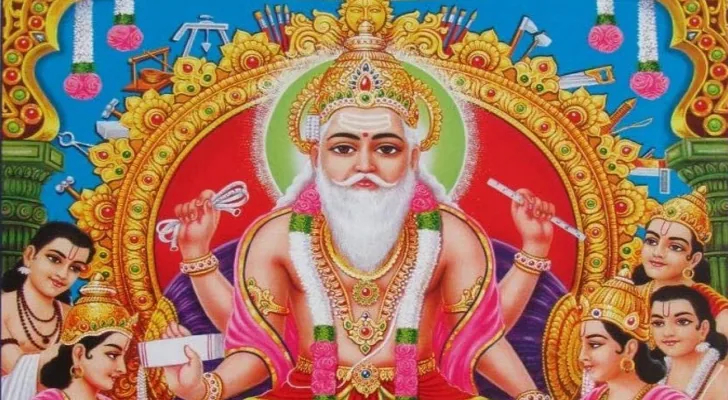
Vishwakarma Puja, also called Vishwakarma Day or Vishwakarma Jayanti, is observed on Kanya Sankranti, the day the sun enters Kanya (Virgo) in the sidereal solar calendar. Unlike most Hindu festivals, which follow the phases of the moon, it follows the sun, so its date is nearly fixed and usually falls on 16, 17 or 18 September. In parts of North India, Vishwakarma Day is observed instead on the day after Diwali, and some communities also keep Vishwakarma Jayanti on Magha Shukla Trayodashi. This page explains each of these dates and how they are worked out.
Vishwakarma Puja dates
The table below lists the dates of Vishwakarma Puja on Kanya Sankranti for 2026 to 2035. The dates are for India. The exact moment of the Sankranti varies from year to year and the local day can differ between regional calendars, so please confirm the date and any timings with your local panchang or temple.
| Year | Date | Day |
|---|---|---|
| 2026 | 17 September 2026 | Thursday |
| 2027 | 17 September 2027 | Friday |
| 2028 | 16 September 2028 | Saturday |
| 2029 | 17 September 2029 | Monday |
| 2030 | 17 September 2030 | Tuesday |
| 2031 | 17 September 2031 | Wednesday |
| 2032 | 16 September 2032 | Thursday |
| 2033 | 17 September 2033 | Saturday |
| 2034 | 17 September 2034 | Sunday |
| 2035 | 17 September 2035 | Monday |
Why it falls in September
Hindu solar months begin when the sun moves from one rashi (zodiac sign) to the next. Each such transit is called a sankranti. When the sun leaves Simha (Leo) and enters Kanya (Virgo), the day is Kanya Sankranti, and this is the day on which Vishwakarma Puja is traditionally observed in eastern India and in workplaces across the country. In Bengal it is often called Bhadra Sankranti, as it marks the last day of the Bengali month of Bhadra.
Because the sun's movement through the sidereal zodiac repeats almost exactly each year, Kanya Sankranti stays within a narrow window of the Gregorian calendar. Small differences in the time of the transit, and the effect of leap years, move it between 16, 17 and 18 September.
How the date is decided
Astrologers and calendar makers calculate the precise moment when the sun enters Kanya. The puja is then fixed on the day associated with that moment. When the transit happens in the morning or during the day, the puja is held on that day. When it happens late in the evening or at night, regional calendars apply their own rules, and some mark the observance on the following day. This is why two calendars occasionally list dates one day apart, and why it is always worth checking a local panchang.
Most factories, workshops and offices simply follow the date announced in their region or by their employer, which is usually the date printed in the local calendar.
Vishwakarma Day after Diwali
In parts of North India, such as Punjab, Haryana, Delhi and Himachal Pradesh, Vishwakarma Day is observed on the day after Diwali, the same day as Govardhan Puja. This falls on Kartika Shukla Pratipada in the lunar calendar, so its Gregorian date changes every year, usually in October or November. On this day workshops, shops and factories clean and worship their tools and machines in the same spirit as the September festival, and the day is often a break from work after the Diwali celebrations.
Vishwakarma Jayanti on Magha Shukla Trayodashi
Some communities, especially among craft groups that regard Lord Vishwakarma as their ancestor, observe Vishwakarma Jayanti on Magha Shukla Trayodashi, the thirteenth day of the bright fortnight of the month of Magha. This usually falls in January or February. It is kept as Lord Vishwakarma's appearance day with puja, processions and community gatherings, while the September festival remains the main day for worshipping tools and machines.
Best time of day for the puja
There is no single time that suits every place and year, as auspicious timings depend on the local sunrise and the moment of the Sankranti. In general:
- Most people perform the puja in the morning or during the daytime, after bathing and cleaning the workplace and tools.
- Many families and priests choose a time within the Sankranti punya kaal, the auspicious period linked with the sun's transit, as given in the local panchang.
- Many people avoid Rahu Kaal, which also varies by place and day.
- Workplace pujas are often completed before midday so that prasad can be shared and the community meal can follow.
If you are unsure, ask a local priest or follow your local calendar. For the steps of the puja, see the Vishwakarma Puja vidhi, and for what to prepare, see Vishwakarma Puja items.
Frequently asked questions
Is Vishwakarma Puja always on 17 September?
No. It is often on 17 September, but because it follows the sun's entry into Kanya, it can fall on 16, 17 or 18 September depending on the year and the regional calendar.
Why does Vishwakarma Puja not change date like Diwali?
Diwali follows the lunar calendar, which shifts against the Gregorian calendar each year. Vishwakarma Puja on Kanya Sankranti follows the solar calendar, so it stays in mid-September.
Why do some people celebrate it after Diwali?
That is a regional tradition. In parts of North India, Vishwakarma Day is kept on the day after Diwali, alongside Govardhan Puja. Both observances honour Lord Vishwakarma.
Is Vishwakarma Puja a holiday?
Many factories, workshops and offices close for the day, especially in eastern India, and some state governments list it as a holiday. Check your state's holiday list or your employer's calendar.
What is done on the day?
People clean their tools, machines and workplace, worship Lord Vishwakarma, listen to the Vishwakarma Puja katha, sing the aarti and share prasad. More on the meaning of the day is on the significance of Vishwakarma Puja page.
विश्वकर्मा पूजा, जिसे विश्वकर्मा दिवस या विश्वकर्मा जयंती भी कहा जाता है, कन्या संक्रांति के दिन होती है, जब नाक्षत्र सौर पंचांग के अनुसार सूर्य कन्या राशि में प्रवेश करते हैं। ज़्यादातर हिंदू पर्व चंद्रमा की कलाओं पर आधारित होते हैं, लेकिन यह पर्व सूर्य पर आधारित है, इसलिए इसकी तारीख लगभग तय रहती है और आमतौर पर 16, 17 या 18 सितंबर को पड़ती है। उत्तर भारत के कुछ हिस्सों में विश्वकर्मा दिवस इसके बजाय दिवाली के अगले दिन मनाया जाता है, और कुछ समुदाय माघ शुक्ल त्रयोदशी को विश्वकर्मा जयंती भी मनाते हैं। इस पेज पर इन सभी तिथियों के बारे में और उन्हें तय करने के तरीके के बारे में बताया गया है।
विश्वकर्मा पूजा की तिथियां
नीचे दी गई तालिका में 2026 से 2035 तक कन्या संक्रांति पर पड़ने वाली विश्वकर्मा पूजा की तारीखें दी गई हैं। ये तारीखें भारत के लिए हैं। संक्रांति का सही समय हर साल बदलता है और अलग-अलग क्षेत्रीय पंचांगों में दिन में अंतर हो सकता है, इसलिए तारीख और समय की पुष्टि अपने स्थानीय पंचांग या मंदिर से अवश्य कर लें।
| वर्ष | तारीख | दिन |
|---|---|---|
| 2026 | 17 सितंबर 2026 | गुरुवार |
| 2027 | 17 सितंबर 2027 | शुक्रवार |
| 2028 | 16 सितंबर 2028 | शनिवार |
| 2029 | 17 सितंबर 2029 | सोमवार |
| 2030 | 17 सितंबर 2030 | मंगलवार |
| 2031 | 17 सितंबर 2031 | बुधवार |
| 2032 | 16 सितंबर 2032 | गुरुवार |
| 2033 | 17 सितंबर 2033 | शनिवार |
| 2034 | 17 सितंबर 2034 | रविवार |
| 2035 | 17 सितंबर 2035 | सोमवार |
यह सितंबर में ही क्यों आती है
हिंदू सौर महीने तब शुरू होते हैं जब सूर्य एक राशि से दूसरी राशि में जाते हैं। सूर्य के इस राशि परिवर्तन को संक्रांति कहते हैं। जब सूर्य सिंह राशि छोड़कर कन्या राशि में प्रवेश करते हैं, तो वह दिन कन्या संक्रांति कहलाता है, और पूर्वी भारत तथा देशभर के कार्यस्थलों में इसी दिन परंपरागत रूप से विश्वकर्मा पूजा होती है। बंगाल में इसे अक्सर भाद्र संक्रांति कहा जाता है, क्योंकि यह बांग्ला महीने भाद्र का अंतिम दिन होता है।
नाक्षत्र राशिचक्र में सूर्य की गति हर साल लगभग एक जैसी रहती है, इसलिए कन्या संक्रांति अंग्रेज़ी कैलेंडर में एक छोटी-सी अवधि के भीतर ही पड़ती है। राशि परिवर्तन के समय में थोड़े अंतर और लीप वर्ष के प्रभाव से यह 16, 17 और 18 सितंबर के बीच आगे-पीछे होती रहती है।
तिथि कैसे तय होती है
ज्योतिषी और पंचांगकार उस सटीक क्षण की गणना करते हैं जब सूर्य कन्या राशि में प्रवेश करते हैं। फिर उसी क्षण से जुड़े दिन पूजा तय की जाती है। अगर राशि परिवर्तन सुबह या दिन में होता है, तो पूजा उसी दिन होती है। अगर यह देर शाम या रात में होता है, तो क्षेत्रीय पंचांग अपने-अपने नियम लागू करते हैं, और कुछ पंचांग अगले दिन पूजा बताते हैं। इसी कारण कभी-कभी दो पंचांगों में एक दिन का अंतर दिखता है, और इसीलिए स्थानीय पंचांग देख लेना हमेशा अच्छा रहता है।
ज़्यादातर कारखाने, कार्यशालाएं और दफ़्तर अपने क्षेत्र में या अपने संस्थान द्वारा घोषित तारीख का पालन करते हैं, जो आमतौर पर स्थानीय कैलेंडर में छपी तारीख ही होती है।
दिवाली के अगले दिन विश्वकर्मा दिवस
उत्तर भारत के कुछ हिस्सों, जैसे पंजाब, हरियाणा, दिल्ली और हिमाचल प्रदेश में, विश्वकर्मा दिवस दिवाली के अगले दिन, यानी गोवर्धन पूजा के दिन मनाया जाता है। चंद्र पंचांग में यह कार्तिक शुक्ल प्रतिपदा होती है, इसलिए अंग्रेज़ी कैलेंडर में इसकी तारीख हर साल बदलती है और आमतौर पर अक्टूबर या नवंबर में पड़ती है। इस दिन कार्यशालाएं, दुकानें और कारखाने सितंबर वाले पर्व की तरह ही अपने औज़ारों और मशीनों की सफ़ाई और पूजा करते हैं, और दिवाली के उत्सव के बाद यह दिन अक्सर काम से छुट्टी का दिन भी होता है।
माघ शुक्ल त्रयोदशी को विश्वकर्मा जयंती
कुछ समुदाय, ख़ासकर वे शिल्पी समाज जो भगवान विश्वकर्मा को अपना पूर्वज मानते हैं, माघ शुक्ल त्रयोदशी, यानी माघ महीने के शुक्ल पक्ष की तेरहवीं तिथि को विश्वकर्मा जयंती मनाते हैं। यह आमतौर पर जनवरी या फ़रवरी में पड़ती है। इस दिन को भगवान विश्वकर्मा के प्राकट्य दिवस के रूप में पूजा, शोभायात्रा और सामूहिक आयोजनों के साथ मनाया जाता है, जबकि औज़ारों और मशीनों की पूजा का मुख्य दिन सितंबर वाला पर्व ही रहता है।
पूजा का उत्तम समय
कोई एक समय हर स्थान और हर वर्ष के लिए सही नहीं होता, क्योंकि शुभ समय स्थानीय सूर्योदय और संक्रांति के क्षण पर निर्भर करता है। सामान्य रूप से:
- ज़्यादातर लोग स्नान करके और कार्यस्थल व औज़ारों की सफ़ाई के बाद सुबह या दिन के समय पूजा करते हैं।
- बहुत से परिवार और पुरोहित स्थानीय पंचांग में दिए गए संक्रांति पुण्य काल, यानी सूर्य के राशि परिवर्तन से जुड़े शुभ समय में पूजा करना पसंद करते हैं।
- बहुत से लोग राहु काल से बचते हैं, जो स्थान और दिन के अनुसार बदलता है।
- कार्यस्थलों पर पूजा अक्सर दोपहर से पहले पूरी कर ली जाती है, ताकि प्रसाद बांटा जा सके और उसके बाद सामूहिक भोज हो सके।
अगर आप निश्चित न हों, तो स्थानीय पुरोहित से पूछ लें या अपने स्थानीय पंचांग का पालन करें। पूजा के चरणों के लिए विश्वकर्मा पूजा विधि और तैयारी के लिए विश्वकर्मा पूजा सामग्री देखें।
अक्सर पूछे जाने वाले प्रश्न
क्या विश्वकर्मा पूजा हमेशा 17 सितंबर को होती है?
नहीं। यह अक्सर 17 सितंबर को होती है, लेकिन चूंकि यह सूर्य के कन्या राशि में प्रवेश पर आधारित है, इसलिए वर्ष और क्षेत्रीय पंचांग के अनुसार 16, 17 या 18 सितंबर को पड़ सकती है।
दिवाली की तरह विश्वकर्मा पूजा की तारीख क्यों नहीं बदलती?
दिवाली चंद्र पंचांग पर आधारित है, जो हर साल अंग्रेज़ी कैलेंडर के मुक़ाबले खिसकता रहता है। कन्या संक्रांति वाली विश्वकर्मा पूजा सौर पंचांग पर आधारित है, इसलिए यह सितंबर के मध्य में ही रहती है।
कुछ लोग इसे दिवाली के बाद क्यों मनाते हैं?
यह एक क्षेत्रीय परंपरा है। उत्तर भारत के कुछ हिस्सों में विश्वकर्मा दिवस दिवाली के अगले दिन गोवर्धन पूजा के साथ मनाया जाता है। दोनों ही अवसर भगवान विश्वकर्मा को समर्पित हैं।
क्या विश्वकर्मा पूजा पर छुट्टी होती है?
कई कारखाने, कार्यशालाएं और दफ़्तर, ख़ासकर पूर्वी भारत में, इस दिन बंद रहते हैं, और कुछ राज्य सरकारें इसे अपनी छुट्टियों की सूची में शामिल करती हैं। अपने राज्य की छुट्टियों की सूची या अपने संस्थान का कैलेंडर देख लें।
इस दिन क्या किया जाता है?
लोग अपने औज़ारों, मशीनों और कार्यस्थल की सफ़ाई करते हैं, भगवान विश्वकर्मा की पूजा करते हैं, विश्वकर्मा पूजा कथा सुनते हैं, आरती गाते हैं और प्रसाद बांटते हैं। इस दिन के अर्थ के बारे में विश्वकर्मा पूजा का महत्व पेज पर और पढ़ें।